J.SIKORA REFERENCE
Source: Uncategorized • Published:
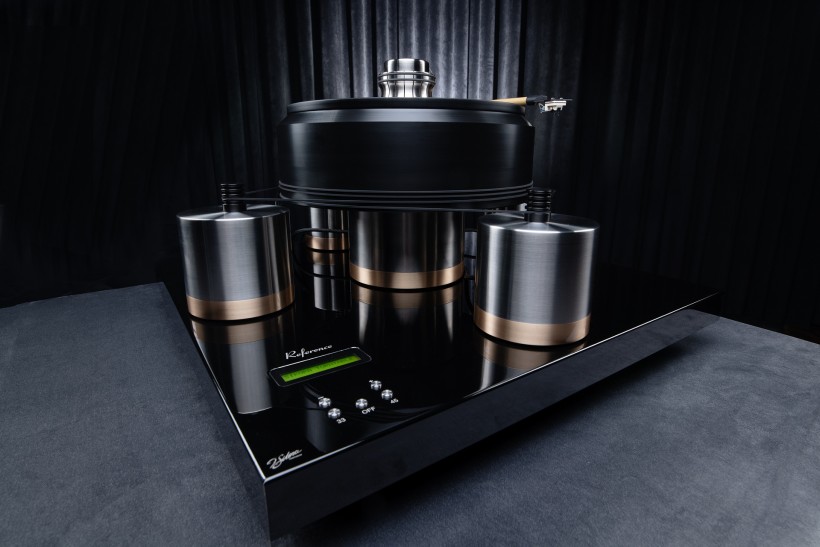
Several months ago, I realized that I have never reviewed J.Sikora Reference turntable. I was the first ever to review their deck called Basic (which was later renamed to Standard), the first reviewer to add it to my reference setup (in the Max version), and later I reviewed almost every piece of audio gear this brand released. Not the top deck, though, but that has finally changed, and here’s what I found out about it.
Introduction
A while ago, Robert Sikora called me following one of many previous conversations, specifically the one where I sort of joked (not to say: complained) that while I had a chance to review almost every piece of equipment they had ever released, somehow neither the J.Sikora Reference nor the Standard Max Supreme were among them. And so he called me and said that since the holidays were coming, they could bring one of those two decks from their showroom to me and leave it for at least two months. Because I was afraid that after spending time with Standard Max Supreme—which I personally consider the most eye-pleasing among all J.Sikora models—I wouldn’t be able to part with it (which would mean a significant expenditure), I chose the J. Sikora Reference.
And so, shortly before the trip to Berlin for the SoundSpace Systems Rossignol review—one that you can find HERE (where we met with Robert Sikora and Adam Niezbecki again)—the gentlemen bravely (just to remind you, I live on the fourth floor, no elevator, and the Reference weighs over 100 kg) brought the aforementioned top model to my room and set it up for me. We even recorded a short video for their social media, and I used it to publicly joke that, 11 years after my first review of their product, Sikora finally decided I’d matured enough to be worthy of testing their (so far) top-of-the-line model.
They armed the deck with their top tonearm, the KV12 Max Zirconium Series (that I had been using as my reference in my setup for a few years now, so a very familiar one), and Adam Niezbecki (perfectly, as always) set up my own Air Tight PC-3 cartridge in it. We also agreed that at some point, they would bring the new Aidas Mammoth Gold LE for a separate review (which is a hint that this review is coming as well at some point). At first, the plan was to partner these two top-of-the-line (or three, if you also consider the tonearm) models, but later we had to modify the plan because the deck had to go back to Lublin before the cartridge could arrive, and so I will review the cartridge as well, just on my deck in the near future.
Design and Features
Since J.Sikora Reference has been on the market for several years and has probably been reviewed a dozen times or more, I won’t bore you with too much well-known detail about its design and features; instead, I’ll offer only the bare minimum.
If that’s your first contact with this brand and/or model, here’s what you need to know:It is a so-called belt-driven mass-loader, which means it is heavy (100 kg or so, with a footprint of 560 x 560 x 380 mm), and it is the mass itself and the materials used in the design that are responsible for getting rid of unwanted vibrations and dispersing unwanted energy. As opposed to the so-called suspended designs, there are no flexible elements in the design that could dampen vibration. It is also a belt-drive deck, which means that the torque from the motors to the platter is transmitted via belts (4 of them, one from each of the four motors). Each motor is placed in a separate, heavy (you can probably spot the pattern – J.Sikora = heavy) housing. Each of them sits on the base of the deck with some silicone feet in between. Inside, the manufacturer also provided proper vibration damping to avoid transmitting those vibrations to the platter via the belts. The speed control is electronic—you can change and adjust the rotational speed of the platter using buttons placed next to a small display. Using the buttons, one starts and stops the rotation as well. You probably already know that the rock-steady speed is one of many prides and joys of all the J.Sikora designs. The Polish manufacturer, based on its decades of experience in the metalworking industry, decided to develop a design made of various metals, including aluminum, copper, Inox, bronze, and cast iron. Each choice was deliberate and intended to benefit the most from the specific properties of each of those metals and their placement within the design. All in service of the ultimate goal—the best possible sound achieved by ensuring the best possible operating conditions for a stylus reading information from a record’s groove and sending it along the tonearm via equally carefully selected wiring.
Most of the parts of the deck and tonearm are made in-house, as the manufacturer benefited from a machine park they had used before they started making turntables. In addition, they invested heavily in, among other things, CNC machines, which increased not only their ability to make most components of all decks and tonearms in-house but also their ability to fully control quality while making more and faster to meet a growing demand. Some elements are still contracted out; for example, the super-quiet (four units in this model) motors made by the Swiss company Papst (which are still modified by the J.Sikora crew to ensure an even lower level of noise), and the electronic circuits for the controller, which, while designed in-house, are made by an external specialist company.
The Reference, like all other J.Sikora models, features an external power supply. In this case, it is the Reference PS that delivers 24V DC to the motors and the control circuits via the umbilical cable.
 The J.Sikora Reference features an enormous platter that alone weighs 18 kg. It is made of Delrin and features a sort of insert made of cast iron to improve both inertia and vibration damping. It rests on an inverted ceramic ball bearing and a steel shaft. On top of the platter, you will find a glass mat, and a quite heavy record clamp of a complex design is part of the deal as well. By the way, that is (as far as I know) the only element of the design that, over the years, has gotten smaller and lighter. The original clamp that I still own and use with my Standard Max turned out to be a little too big (its diameter) for some records with large labels in the middle. And so, in response to the feedback from some customers, the Polish manufacturer scaled it down a little. I actually have both and use them interchangeably, and therefore can say with certainty that both do an equally excellent job.
As a standard, the Reference is fitted with one armboard and one tonearm, but you can use up to three of those if you order additional armboards. J.Sikora, obviously, recommends its own arms, preferably from the top Max Zirconium Series, either 9 or 12 inches long, but with the right armboard you can use any tonearm of your choice (although it makes sense only if it matches the deck in terms of performance).
The highly acclaimed J.Sikora tonearms stand out among the competition due to the material they decided to use for the conical tubes, namely Kevlar. It is a unipivot, oil-damped design. Other elements are made of aluminum, bronze, brass, and stainless steel. The wiring comes from Soyaton, and it is based on 24K gold-plated 6N OCC copper. Regardless of the length (again: 9 or 12 inches), these are medium-weight (effective weight) arms, which means they will work perfectly with most cartridges. The arm comes in a natural yellow color or (lacquered) black matte. Regardless of the series—Standard (for an additional fee) or Max (included)—Tonearms can be fitted with on-the-fly VTA adjustment. They also allow for azimuth and VTF adjustments. Oh, for those who, like me, know the tonearms from the start—the manufacturer addressed the “complaints” of some users (me included) and added a secure lock for the arm in the armrest!
 Last but not least – J.Sikora Reference is a beautiful, perfectly made, and finished piece of audio equipment! The only thing it lacks is a dust cover—that’s something that, if interested, each user has to take care of themselves. Other than that, it’s a stunning design—a real eye-pleaser.
Sound quality
At last! The top model was here, and I could enjoy its performance in my own room—hurray! Not so fast, sir. Life is not perfect, as the administrator of my building proved shortly after the delivery when he decided it was the best possible time to start the renovation of said building. And it is still on when I am finishing editing this text. So it wasn’t as easy to write about it as I thought it would be, but I hope you can still enjoy my writing as much as I enjoyed the J.Sikora Reference being here.
I knew that this review would be different from any other I did over the years. Why? Because it felt more like an overdue reunion with an old friend. We had known each other for many years; we had met dozens of times in various circumstances, and now, when he finally came to visit me at my home, I was supposed to assess him. It didn’t feel right—it was my old friend! On the other hand, the review was my idea and a chance to prove or disprove my longstanding impression, or maybe I could even call it a thesis. What thesis? Let me share it with you.
Due to the aforementioned less-than-optimal, to say the least, listening conditions, I’ve based the review not only (but mostly!) on what I managed to experience in my room, but also on many other encounters with the top J.Sikora deck. I actually had dozens or so chances to listen to it in the manufacturer’s showroom, and at the various shows and presentations, usually paired with much more expensive setups than mine. Only recently, I used it for the aforementioned SoundSpace Systems Rossignol (almost 300 kEUR) loudspeakers review, and it did an excellent job allowing these top-high-end speakers to truly shine. All that led to the long-lasting „friendship,” and to the aforementioned thesis.
None of those experiences had happened in my room, and maybe that is why they had led me to an (extrapolated) conclusion that the difference in sound quality between my Standard Max and the now-tested deck was not that significant. Or maybe it was the case of a guy who owned a lower model and tried to convince himself that it was (almost) as good as the top one just to feel better. Who knows? It was this hands-on experience that finally allowed me to confront previous ones with what I heard in the most familiar setup in my own room.
Before that, it seemed to me that, obviously, spending much more on the top deck offered a reward, but also that it wasn’t anywhere close to what the price difference suggested. Which, if you know the high-end market, should not come as a surprise (and probably made me feel better about not having the Reference). Once your setup reaches a certain performance level, to take even a tiny step toward the unattainable “perfect” sound (whatever it is for you) that we all strive for, you usually need to spend a lot of money on top of what you already did. Yet in this case, I strongly believed that the benefit would have been even smaller than usual.
On the other hand, though, as I have mentioned numerous times in my reviews, whenever possible, one should assess every component in one’s own system, as only then is it possible to get the full picture, including all pros and cons, and also to check how a particular component fits into the whole setup. The latter, and I will come back to it later, can also be quite important.
Boy, oh boy, was I wrong (about the former) and right (about the latter) at the same time. It became painfully clear to me once I finally played the first album on the J.Sikora Reference in my own room. Let me emphasize once more that the only actual difference was the deck. I used the same (a different unit but the same model) KV12 Max tonearm, the very same Air Tight PC-3 cartridge, the same (at first) ESE Lab Nibiru V 5.0 (and later GrandiNote Celio MK IV and Thoeress Phono Enhancer MK III) phono stage, and the same Soyaton Benchmark RCA IC to connect it to GrandiNote Shinai Class A solid-state integrated amplifier, that drove the very same brand’s MACH 4 loudspeakers (although featuring tested at the same time Divine Acoustic Newton Diamond feet) via (firstly) my trusted Soyaton Benchmark MK2 and (later) my new WK Audio TheRED speaker cables.
The first album I dropped the stylus on was Jacques Loussier’s “Pulsion”, and it was clear as day that I was wrong about the J.Sikora Reference delivering only marginally better performance than the Standard Max. Already the first track told me that the presentation, as delivered by the Reference, had significantly more authority and grandeur. It is a “simple” recording—just a piano and drums, one might say. Yet it bursts with incredible energy and surprises you with stunning dynamics (not only when you listen to it for the first time, but each time after as well), and, at least at times, with a very fast pace. Listening to it was an extraordinary experience already with my Standard Max, but Reference elevated these particular qualities of the recording to a new, even higher level.
I thought the piano was big and powerful on my deck when I had listened to this album before, but now it has gotten even more realistic, offering an even more convincing, more palpable, more “here and now” performance. The scale of its sound, the momentum, and the grandeur were simply something else. The accompanying drums, even while playing only the „second fiddle”, so to speak, increased their presence in the room as well. They kicked faster, harder, and, surprisingly, even a touch tighter, particularly in the lower part of the range.
At the same time, the cymbals produced more sparks; they sounded clearer and more energetic, yet without even a hint of exaggeration and/or distortion. One could say that the sound of both instruments, as played by J.Sikora Reference, gained some toned muscles and became even more visceral. Importantly, those “muscles” were never abused—they did their job only when needed, showing me how powerful both these instruments can be. Not even once did I feel like the bass was overblown or like the instrument got too big. Everything was just right, accurate, just as I would expect from the very top turntable (or any source, for that matter), playing an excellent recording.
Realizing that got me wondering. If I had this feeling, or this experience, with a recording of just two instruments—admittedly huge and powerful ones, but still only two of them—what would happen if I played an orchestral piece? How much more convincing would it be with the J.Sikora Reference? I didn’t want to wait to find out. Rimsky-Korsakov’s “Dance of the Tumblers” from “The Snow Maiden” was not a bad choice to find out. Well, if I needed any further proof of the Reference’s ability to deliver smashing dynamics, thunderous lower-end performance, and a bigger-scale sound than the Standard Max, there it was on display despite certain limitations of my speakers.
I mean, MACH4s are an absolute delight in so many respects that I love them unconditionally. They surprise everybody who visits my room with their bass performance (where does this bass come from? is the common question), but due to their design, they are not quite a match when it comes to sheer power or punch for my Ubiq Audio Model One speakers featuring 12-inch woofers in closed cabinets, not to mention the aforementioned phenomenal (semi-active) SoundSpace Systems Rossignol. And yet, they also clearly showcased the advantage in the grandeur and effortlessness of the presentation delivered by the J.Sikora Reference over my Standard Max. It came from a more fleshy (not flashy, and not fatty) lower end that felt as if it were delivered by significantly bigger woofers/speakers and pushed much more air into the room than MACH4 (theoretically) ever could. Let me emphasize it once more—it did feel natural and effortless—no strain, no flexing the muscles, just a natural, powerful flow of music. It was a delightful and impressive performance by both the tested deck and the Italian speakers (the whole setup, actually).
While these not particularly expensive speakers may not deliver quite as deeply extended and thunderous bass as those with big woofers (because that is still the reality I tried to describe before—J.Sikora Reference pushed these loudspeakers to their limits and let me explore those, but ultimately stopped right there), there are several things they do way better than the price tag suggests. For example, the dynamics and immediacy (fast impulse response) of the sound are phenomenal, as is the high energy of the presentation. All of those advantages stem from, I figure, the crossover-less design. And while Standard Max, and even the Aspire (reviewed HERE), clearly benefited from it as it allowed them to fully shine, J.Sikora Reference took these features to yet another level, proving that there is still room for improvement in my current setup.
Listening to Rimsky-Korsakov, and later to Stravinsky, Mahler, and Mozart (and others, as once I dipped my toes in classical music, I kept going deeper and deeper into it), I kept pushing the volume up to find the limits of the setup, and I failed to do that (those who know me realize that my “very loud setting” is not that crazy, but loud enough to push the tested components). The Reference kept its cool, so to speak, and delivered an incredibly well-organized presentation. Everything had its firm place and three-dimensional shape on the large stage. Layer after layer was delivered with high density and intensity, and the turntable kept resolving even the tiniest details and subtleties of every recording, no matter how complex the music and how high I went with the volume. All of that was, in most cases, delivered in a way that was highly immersive on the one hand, yet presented from a proper perspective (of a man in an audience). Still, it momentarily made me feel as if I were conducting the orchestra myself, almost surrounded by the instruments. That feeling was due to the closeness, power, high energy, and intensity of the presentation.
After those experiences with classical music, I didn’t need any more proof that the tested record player had a clear advantage in terms of scale and sheer power over Standard Max, but also an edge in resolving the tiniest details. The latter was not that obvious, but when it comes to music so complex, so rich with tiny little pieces of information, even the slightest advantage matters. I had always liked to say that if a component or the entire setup delivers large-scale classical music in such a complete and convincing way, it is surely fully capable of playing any other music genre. And so, I continued listening to various favorite albums to find out whether I could recognize any further advantages of the top model.
The next one I picked from the shelf was Dżem’s „Akustycznie – Suplement”. It confirmed all the observations I’d made so far, but it also allowed me to focus on some other aspects of the performance. With J.Sikora Reference, the scale of sound was again bigger, and so was the size and presence of all the instruments and vocals. What I noticed on top of that was that it also created the impression of a slightly more forward presentation, with my Standard Max being slightly more laid-back in this comparison. This was a minor difference, yet it was clearly noticeable. Importantly, the sound, or the foreground, was not pushed forward—it stayed on the line connecting speakers. It was just sort of “bigger”, more “solid”, and therefore it seemed more present, more palpable, and closer. Both decks offered almost exactly the same width and depth of the stage, but the Reference seemed to offer a bigger foreground placed a little closer to me; hence the feeling of a more direct, more forward presentation. Not a big difference, but my job was to find out how these two top high-level performers differ, so here it is.
And the truth is, there were no more surprises. All the J.Sikora turntables share a lot of qualities, and what you get when upgrading to a higher model is bigger, better, faster, and more (of the same). So no wonder that the presentation was stunning in terms of dynamics, resolution, and high levels of musical energy (whenever a recording I played allowed it), like when I listened to Dire Straits’ „Alchemy” live album, or David Gilmour’s „Live in Gdansk”, or Al Di Meola’s ”Tour De Force”. Even the smallest Aspire loves to rock, but both Standard Max and Reference delivered such music with so much power, at such high energy and dynamics, that any technical imperfections of these recordings (almost) disappeared.
Which I found interesting, because, while the tested record player did a stunning job resolving all the details and subtleties from the best audiophile recordings, when it came to rock, it did a remarkable job of not emphasizing the imperfections. And so the (at times) little shrill treble didn’t bother me, and neither did the sibilants. The bass was not quite as tight as I wished, but it was just part of the game, so to speak, not a flaw. It was the rhythm, pace, and a sense of (almost) participating in the events that completely took over the narrative, turning the listening sessions into a fun (so much fun!), highly engaging experience.
The audiophile jazz recordings, and I listened to a lot of them as well, proved beyond any doubt that the transparency and clarity attributed to both the deck and the phenomenal KV12 Max tonearm (you can check out its review HERE) were on par with the handful of the best sources, analog and digital, I’d ever heard. And yet… As was also the case with the less expensive models, Reference stayed away from the cold, super-analytical school of presentation. It delivered a very natural and musical rendition of every album I played on it, no matter the genre.
These are the very basic qualities I look for in every audio component. The others—high resolution, transparency, clarity, dynamics, high energy, proper presentation of spatial aspects, high expressiveness, range-extremes extension, midrange richness, coherence across the whole frequency range, and so on—are only (necessary!) components that should be used to build a fluid and highly engaging whole that represents the music that was recorded in the best possible way. That is exactly what J.Sikora Reference paired with their own KV 12 Max Zirconium Series tonearm offered at a level that very few analog or digital sources ever achieve.
Summary
The tested J.Sikora Reference paired with the KV12 Max Zirconium Series tonearm is one of the best record players money can buy—I have no doubts about it. It is a complete (I mean, you need a cartridge that offers performance that matches these two, as well as the rest of the setup) and versatile analog source for the top audio systems. It is mechanically quiet (which affects the purity of sound), highly resolving, and transparent. It offers (almost) unmatched dynamics, high musical energy levels, and powerful punch, all delivered with absolute control, and all of that translates into a huge scale of reproduced sound. It makes you feel the music and the performance with your whole body, not only listen to it with your ears. And yes, it is a clear step up from the already fantastic Standard Max.
You may remember me mentioning earlier that each component, even the best one, needs to fit perfectly into a particular setup to allow its user to fully benefit from its advantages. And so, when I spoke to Robert Sikora after the test, I admitted that I was wrong before thinking that Standard Max and Reference were on roughly the same performance level, and yet… And yet in my room, and my setup, I wouldn’t trade the former for the latter because I wouldn’t have fully benefited from it. My setup was good enough to recognize the differences, but J.Sikora Reference deserves even better partners to fully spread its wings. The SoundSpace Systems Rossignol review was the best proof that I needed for that. Still, no matter what kind of (high-end or even top high-end!) system you own, if you’re looking for a stunning analog performer—one that, apart from all the sonic qualities, also offers a remarkable price/performance ratio (as all the serious competitors cost several times more) you should consider this beautifully made machine. That’s a choice that simply can’t be wrong!
Price (when reviewed):
- J.SIKORA REFERENCE with a single tonearm tower and Reference Power Supply: 35.600 EUR
- J.SIKORA REFERENCE with two tonearm towers and Reference Power Supply: 38.200 EUR
- J.SIKORA KV12 Max Zirconium Series tonearm: 12.500 EUR
Manufacturer: J.SIKORA
Technical specifications (according to the manufacturer):
- Platter weight [kg]: 18
- Platter material: Delrin® and cast iron
- Material: aluminum, copper, Inox, bronze, cast iron
- Bearing type: ceramic ball – inverted
- Motor [pcs]: 4 DC
- Belt: rubber
- Rotation speed [rpm]: 33; 45
- No. of tonearms: 1 (+2 optional)
- Armboard: yes
- Clamp: yes
- Glass mat: yes
- Power supply: yes
- Total weight [kg]: 100
- Dimensions [mm]: 560 x 560 x 380
- Available colors: silver / black high gloss /black mat
Associated equipment:
- Digital source: a custom passive server with WIN10, Roon, Fidelizer Pro 7.10, JCAT NET XE, and JCAT USB XE cards with FERRUM HYPSOS Signature power supply, KECES P8 (mono) linear power supply for the server, JCAT USB Isolator
- D/A Converter: LampizatOr Poseidon 2 + Ideon Audio 3R Master Time (USB signal regenerator)
- Analog front end: J.Sikora Standard MAX turntable, J.Sikora KV9 & J.Sikora KV12 MAX tonearms, AirTight PC-3, Audio-Technica PTG33 Prestige & LE SON LS10 MKII cartridges, GrandiNote Celio MK IV & ESE Lab Nibiru V 5 phono stages.
- Power amplifiers: GrandiNote Shinai, Circle Labs M200, Art Audio Symphony II (modified)
- Preamplifier: Circle Labs P300
- Loudspeakers: GrandiNote MACH4, Ubiq Audio Model ONE Duelund Edition.
- Interconnects: Bastanis Imperial RCA x2, Soyaton Benchmark RCA, Hijiri Million Kiwami RCA, Hijiri HCI-20 RCA, TelluriumQ Ultra Black RCA, KBL Sound Himalaya 2 XLR, NxLT Ether XLR, David Laboga Custom Audio AKOYA USB, David Laboga Custom Audio Digital Sound Wave Sapphire Ethernet
- Speaker cables: Soyaton Benchmark Mk2, WK Audio TheRED
- Power cables: DL Custom Audio 3D-S-AC Connect, LessLoss DFPC Signature, Gigawatt LC-3
- Power: Gigawatt PF-2 MK2 and Gigawatt PC-3 SE Evo+; a custom power line with Gigawatt LC-Y in-wall cable; Gigawatt G-044 Schuko and Furutech FT-SWS-D (R)
- Network: Lumin N1 + optical LAN isolators
- Racks: Base VI, Rogoz Audio 3RP3/BBS
- Anti-vibration accessories: ROGOZ-AUDIO SMO40 and CPPB16 platforms and ROGOZ AUDIO BW40MKII feet, OMEX Symphony 3S, Franc Accessories Ceramic Disc Slim Feet and Wood Block Platform